
You might think content about nervous system regulation is just a trend on TikTok but it’s actually incredibly valuable information since our nervous system is responsible for so many things throughout our body. Think of it as a cell tower for your body, communicating and sending the right messages for your organs, physical movements, and even digestion and heart rate.
Your nervous system can become dysregulated though, which is where this article comes in. We’ll dive into more about what the nervous system is and how to calm the nervous system so that you can live your best life.
What is the Nervous System?
The nervous system lives in your brain, spinal cord, and nerves. It sends commands throughout your body so that your conscious mind doesn’t have to. It’s the voice that keeps you breathing, the push that allows you to move your feet when walking, the nurse that makes sure that cut on your leg is healed.
There are two parts of the nervous system, the Central Nervous System which lives in your brain and spinal cord, and the Peripheral Nervous System, which reaches beyond to other parts of the body.
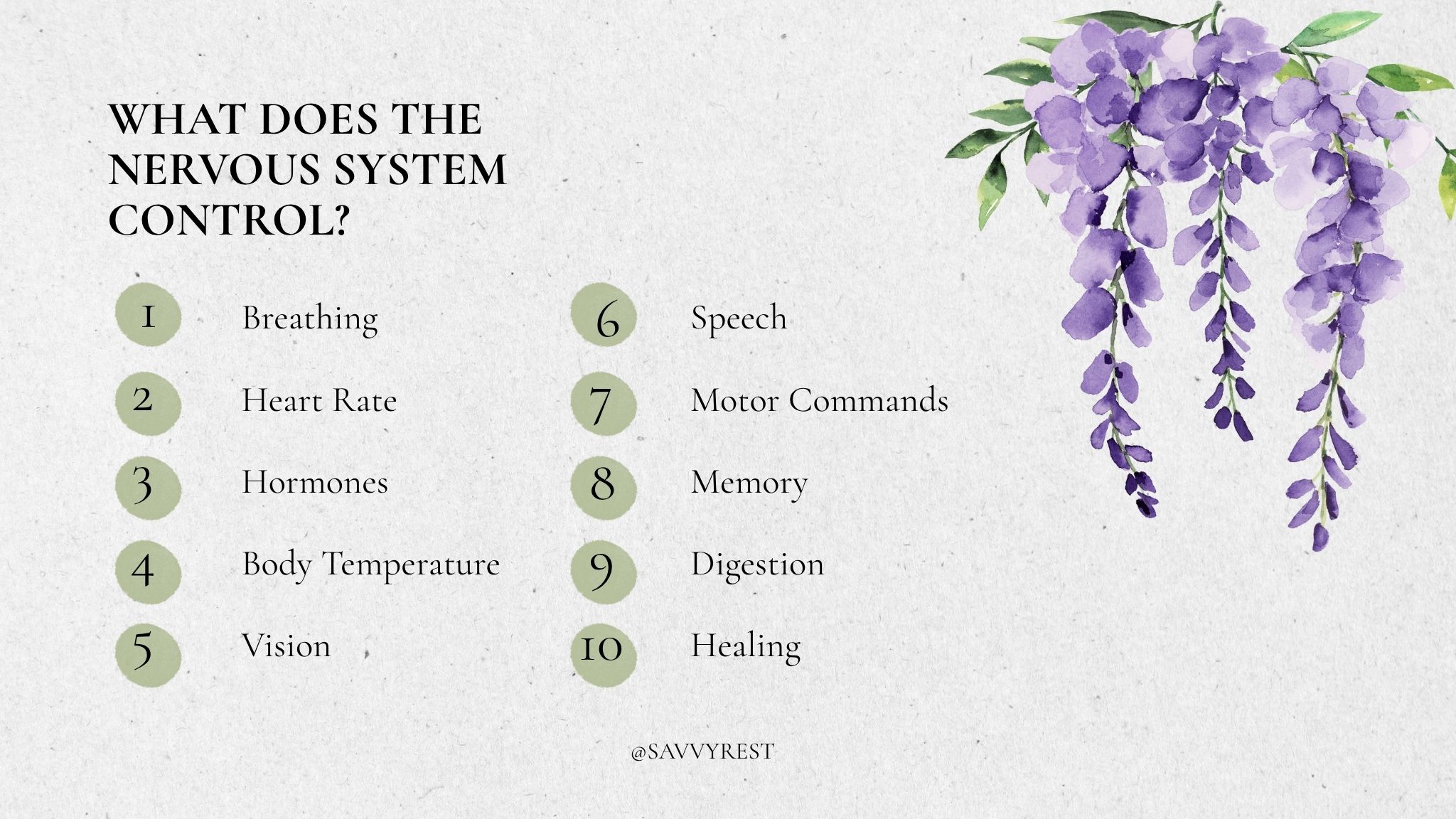
What does the Nervous System Control?
There is a vast array of functions the nervous system is responsible for, including…
- Breathing
- Heart Rate
- Hormones
- Body Temperature
- Motor commands
- Memories (short term and long term memory storage)
- Vision
- Speech
- Thought process
- Digestion
- Walking
- Healing cuts and bruises
Can the Nervous System Become Dysregulated?
Yes, the nervous system can become dysregulated. Some signs include behavioral and mood changes, insomnia, increased anxiety, and sensory sensitivities. More severe symptoms include tachycardia, fainting, and migraines. Chronic, debilitating symptoms can be linked to dysautonomia.
How to Calm Your Nervous System
Here are a few ways to calm your nervous system that can truly help your physical and mental health.
1. Humming
This is one of the first tricks I learned, but humming can indeed help calm your nervous system. The simple act of humming a tune to yourself can stimulate your vagus nerve which essentially sends signals to your brain and body that it’s time to relax. It turns off your body’s flight or fight response, which is unnecessarily triggered when your nervous system is dysregulated. Whether you want to hum while sitting still with your eyes closed, or you prefer to do so when you are cleaning the kitchen counters, you should notice the positive effect it has.
2. Petting your Dog or Cat
Yes, the perfect excuse to spend more time with your furry friend. Petting your cat or dog increases oxytocin which helps decrease stress. Our pets make us feel loved and appreciated, and that love is of course reciprocated. It is no wonder that their presence has a positive effect on our health.
3. Prioritizing Sleep
As you may have guessed, we are big on sleep at Savvy Rest, and so is your nervous system. Sleep is absolutely vital for your body’s function in general, but it also impacts your nervous system. When you are running on little sleep, anxiety increases. We recommend having a set sleep schedule, putting away your phone at least an hour before bedtime, and investing in a quality, organic mattress that is customized to your preferences for ultimate comfort.
4. Sleeping with a Weighted Blanket
Speaking of sleep, weighted blankets have been shown to decrease anxiety and create a feeling of safety, which can help your body escape from flight or fight mode. It can lull you into a deep sleep instead of feeling on edge.
5. Using Ice on the Neck
Did you know that cold sensations can help activate the vagus nerve? Research has shown that using ice to stimulate the nerve can help decrease your heart rate and improve your mental well-being. But where specifically would you apply the ice? The vagus nerve runs from the brainstem, down the neck, and then branches off to various areas in the body, impacting the heart, stomach, lungs, and more. The best place to stimulate it is on the side of the neck.
6. Warming Activities
On the other side of the spectrum, warmth can also be helpful when trying to soothe the nervous system and create more of a calming effect. Holly Brandenberger, RN and Certified Aromatherapist put together a fantastic list of different warming activities you can try, such as warm baths, hot tea, and using a sauna.
7. Mindfulness through Deep Breathing & Body Scans
Last but certainly not least, is mindfulness. Be present and take deep breaths using tactics such as square breathing that can help you slow down in the face of chaos.
Body scans are also helpful and easy to do. Simply lay down, close your eyes, and focus on one body part at a time, starting at the head. Think about the sensations you feel and move down your whole body, going to your neck, shoulders, arms, hands–all the way down to your toes. Keep steady slow breaths and don’t be afraid to move your body slightly when you feel the need, such as to wiggle your toes or unclench your fists.
Relax the Nervous System
We hope you try one or more of our recommended techniques to relax your nervous system and improve your daily life.
Remember that something as simple as prioritizing sleep can help improve your mood and physical health. If you’re ready to make your bedroom a truly comfortable oasis, check out our organic bedding.
Learn more about Savvy Rest.
Savvy Rest offers exceptionally crafted organic mattresses, bedding, furniture, and more.
Best-Selling Latex Mattress
Choose Your Serenity Mattress
Our most popular GOTS-certified organic mattress. Couples can customize each side of the Serenity for their own comfort preferences.
Create Your MattressMore like this
Organic Bedding
Savvy Rest offers a complete line of organic and natural bedding. Shop organic cotton sheets, waterproof protectors, latex pillows, and more.
Shop all Organic Bedding