
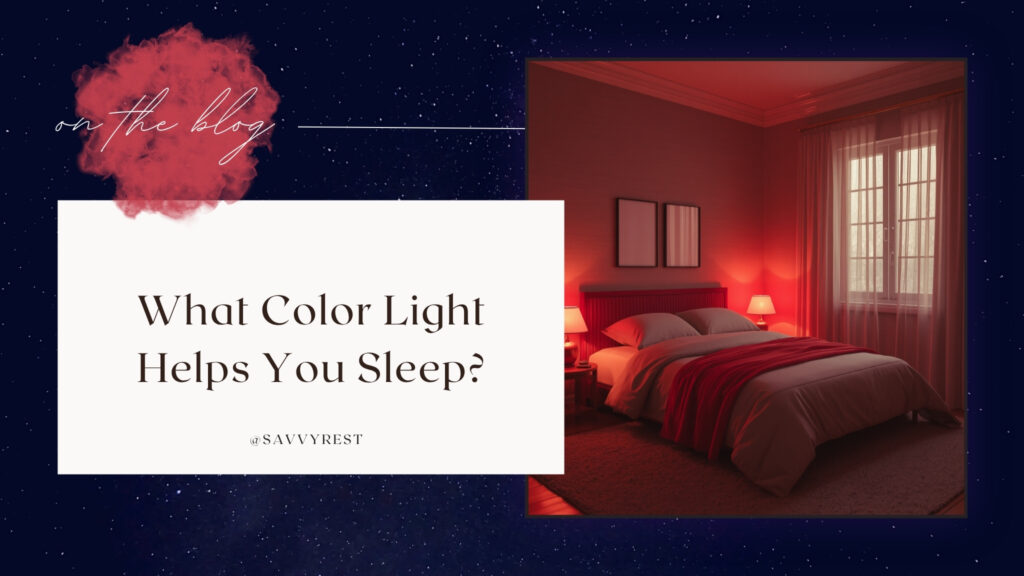
When getting your bedroom ready for sleep, there are several things to consider. Your cell phone should be stowed away to avoid mindless scrolling. Your fan should be turned on to keep you cool (especially in the summer). But have you thought about what color light is best for sleep?
This may sound like an odd question, because shouldn’t it just be dark?
Yes, ideally you should sleep with the lights off and curtains closed. But we’re talking about which colors are best in the quiet moments before drifting off to sleep as your body begins to relax and prepare for hours of rest.
This blog post will discuss the best light color for sleep, which major color to avoid, and what lightbulbs are recommended for your bedroom lamps. Just make sure you’re not reading this article right before bed–remember, no phones!
What Color Light Disturbs Your Sleep?
Blue light can affect your circadian rhythm because it suppresses your brain’s signal to release melatonin in preparation for sleep. It’s as if the store is closed, but all the lights are still on. You’re in bed, all cozy, in a space designed for rest, but you’re scrolling through Instagram, which tells your brain that it needs to stay alert. This can impact both your ability to fall asleep in a reasonable amount of time, as well as your overall ability to stay asleep.
Where is Blue Light Found?
We are primarily exposed to blue light through our cell phone, computer, television, and white LED lightbulbs.
This is why it’s so important to limit your screen time before bed, ideally completely stopping about an hour before you’re ready to go to sleep. This helps prep your mind and body for rest.
It’s also helpful to separate screen time from the bedroom in general, meaning you shouldn’t work on your laptop in bed, even if it’s during the day. When you make a habit of staying alert in bed, the brain will have a harder time associating the space with sleep.
Is Blue Light Ever Beneficial?
While Blue Light is detrimental to sleep health at night, it helps us stay awake and focused during the day and can even positively brighten our mood.
Harvard Health recommends getting plenty of light during the day and limiting exposure at night. It is this pattern that will notify your brain when it’s time to sleep. However, this doesn’t mean they are suggesting you should sit in front of a screen all day. Natural light from the sun, which contains UV rays, is an excellent source of Vitamin D, and a healthy way to maintain a normal circadian rhythm. Go outside in the morning and get at least 10 minutes of sunlight on your skin. Your sleep cycle will thank you.
What is the Best Light Color for Sleep?
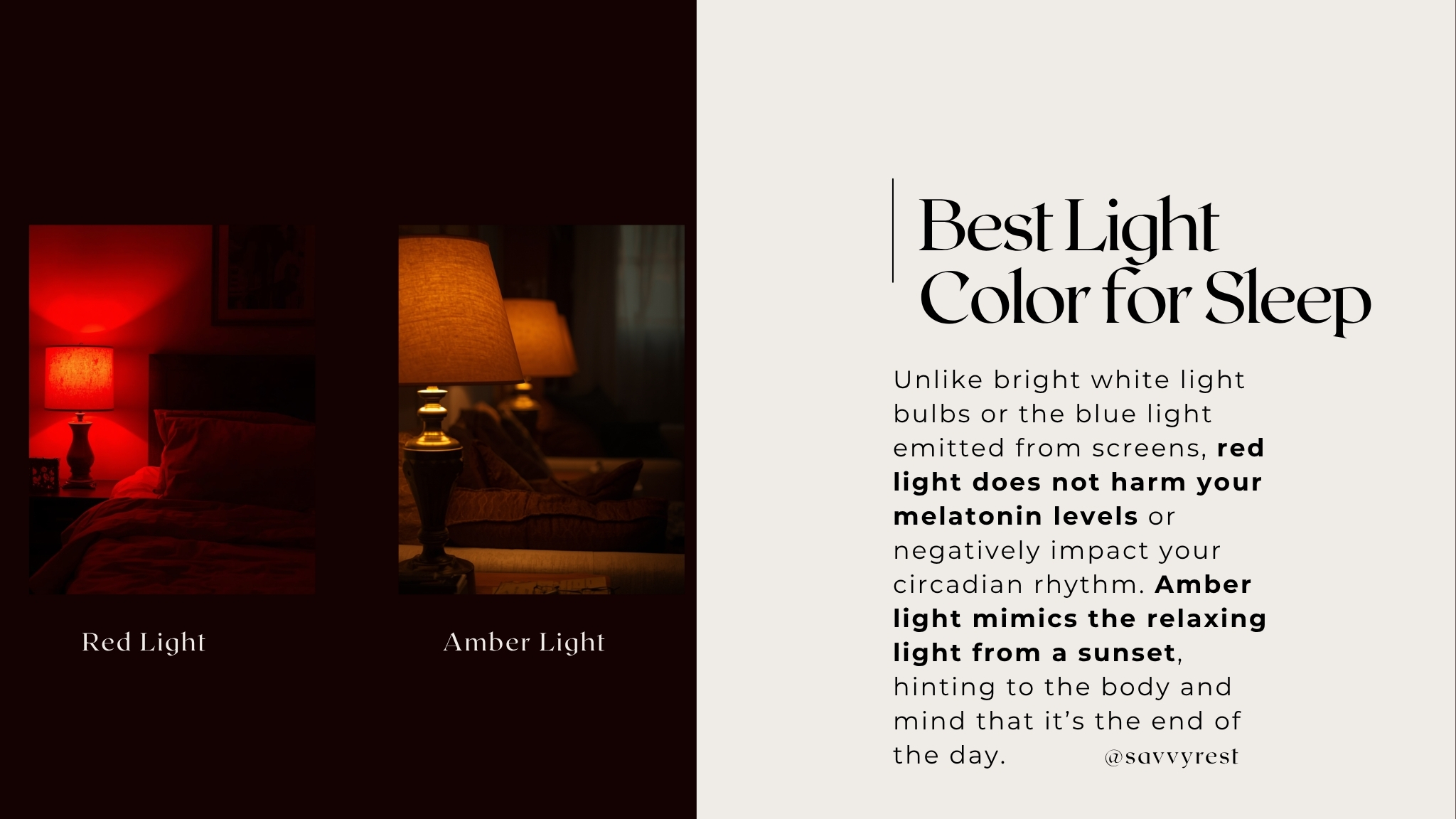
Red Light is the best color for sleep health.
While red light therapy is known for helping minimize wrinkles, stretch marks, and scarring, there are several non-cosmetic benefits to this form of light.
Red light therapy can help decrease inflammation, improve mental well-being, soothe joint pain, and even stimulate hair growth.
Swapping your white LED bulbs for red bulbs can also create a soothing sleep environment, with light less harsh on the eyes. Unlike bright white light bulbs or the blue light emitted from screens, red light does not harm your melatonin levels or negatively impact your circadian rhythm. Dr. Meg Christensen, a licensed Naturopathic physician with a degree in Biochemistry and Biophysics, points out that red light won’t disrupt your circadian rhythm even when you get up in the night to go to the bathroom.
However, to get the most sleep benefits from red light, the bulb must emit red light wavelengths, because it is the actual wavelengths that help promote melatonin production and keep your cortisol at bay. Lightbulbs tinted red can absolutely create a soothing bedroom environment, as red is considered the most relaxing light color for sleep, but may not hold the same scientific results.
We recommend opting for bulbs emitting red light wavelengths. We love these night lights from Loftie, which are available in amber and red.
Amber light is also an excellent choice for bedrooms and nightlights because, like red light, it has a warmer hue that lacks the cortisol-inducing blue light. Amber light mimics the relaxing light from a sunset, hinting to the body and mind that it’s the end of the day. It’s also much gentler on the eyes than traditional light and is recommended to be used in nurseries and can even benefit those with Alzheimer’s since amber light is less overwhelming. This can help decrease agitation.
It’s time to replace your standard light bulbs with ones that work with your circadian rhythm, not against it.
While total darkness is the best choice for boosting melatonin, red and amber lights are the perfect in-between when winding down at night.
Make sure to check out more Savvy Rest sleep health articles.
Learn more about Savvy Rest.
Savvy Rest offers exceptionally crafted organic mattresses, bedding, furniture, and more.
Best-Selling Latex Mattress
Choose Your Serenity Mattress
Our most popular GOTS-certified organic mattress. Couples can customize each side of the Serenity for their own comfort preferences.
Create Your MattressMore like this
Organic Bedding
Savvy Rest offers a complete line of organic and natural bedding. Shop organic cotton sheets, waterproof protectors, latex pillows, and more.
Shop all Organic Bedding