
We all know we need sleep, but sleep is more layered and intricate than just closing your eyes and resting. It is imperative for the mind and body–our own charging system that regenerates cells, organizes memories, and fights inflammation.
There are various stages of sleep that can be classified within two categories: Non-REM (NREM) and REM. But there is also a term that perhaps you haven’t heard of: Core sleep.
Core sleep includes both NREM and REM, but what is it?
This blog post will define core sleep and why it matters to our health.
What is Core Sleep?
Core sleep is a form of deep sleep that is crucial for the body’s healing and overall health, affecting hormones, muscle tissues, information processing, and more.
Think of it as the best of both NREM (Stage 3) and REM–the vital part of sleep that is needed for long-term cognitive function and health.
How Much Core Sleep Do You Need?
Core sleep makes up on average 3-4 hours of your total sleep a night if you are getting between 7-8 hours of sleep.
However, there are certain considerations when determining how many hours of core sleep you need. For example, teenagers need more core sleep than adults since it is recommended teenagers get 8-10 hours of total sleep a night, compared to 7-9 hours for adults.
To learn about how much total sleep you need, make sure to check out our blog post.
Core Sleep vs Deep Sleep
Core sleep includes both NREM and REM, while deep sleep only includes NREM, specifically NREM stage 3.
NREM stage 3 focuses on physical health and body recovery rather than cognitive function. And just like the name suggests, deep sleep is indeed the deepest part of your sleep cycle and the most difficult part of sleep to suddenly wake up from. This is also when your blood pressure and heart rate are at their lowest.
Core Sleep vs REM Sleep
Core sleep includes both NREM and REM. REM sleep is stage 4 of your sleep cycle. REM stands for rapid eye movement and this is when most of your dreams happen. Your eyes moving around is essentially them taking in the scenery of your dreams, as if they have put on virtual reality goggles and are living the experience. Your heart rate increases and your brain is just as active as when you are awake.
Your brain is also sorting through memories and choosing what to keep and what to toss in the virtual bin. It also processes emotions and unfortunately, can even cause the brain to relive fear and trauma, as seen through studies with PTSD patients.
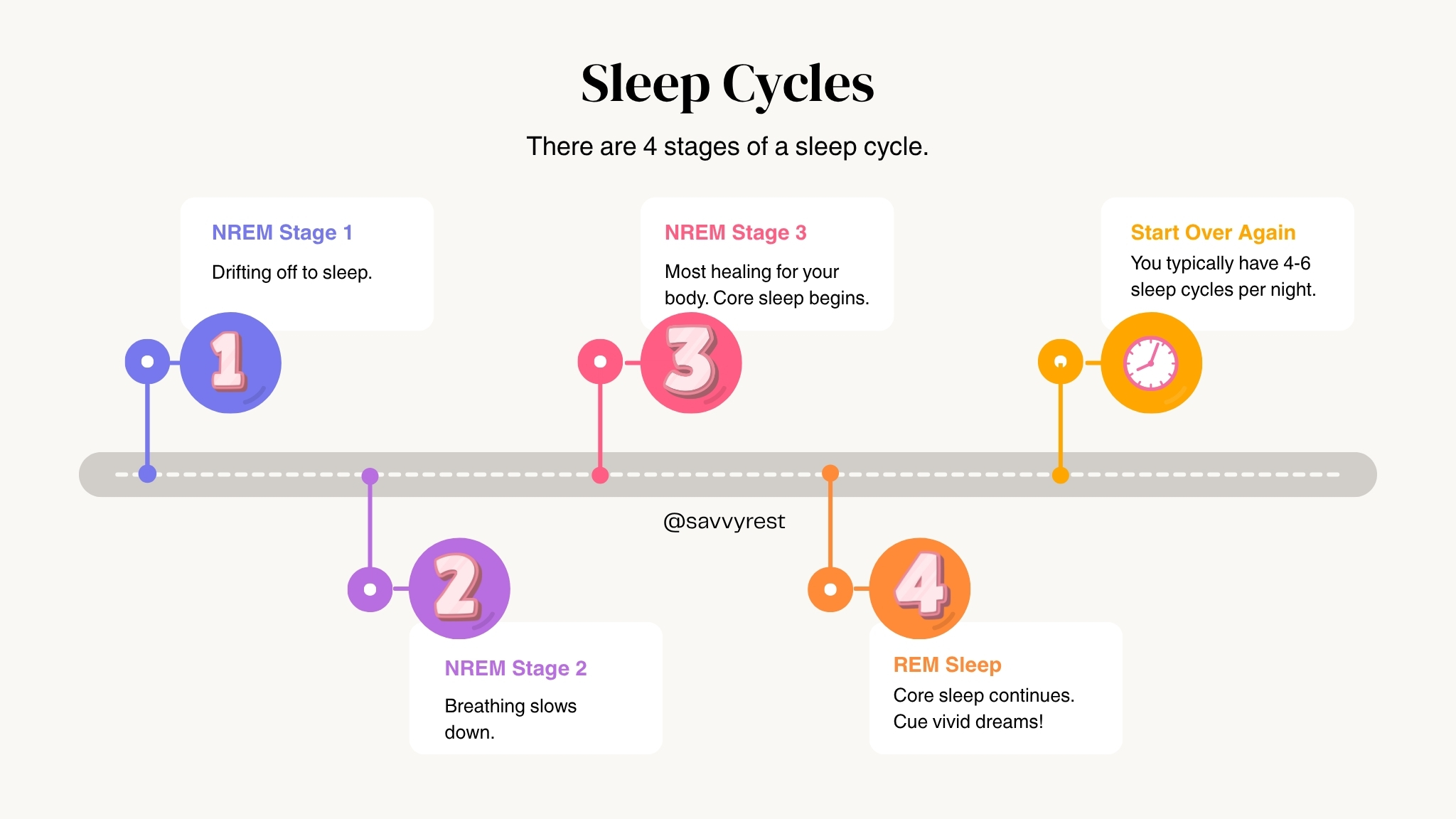
How many stages are there in a sleep cycle?
There are 4 stages in a sleep cycle.
What are the different stages in a sleep cycle?
- NREM Stage 1: Drifting off to sleep.
- NREM Stage 2: Breathing slows.
- NREM Stage 3: Most healing for your body.
- REM: Cue the vivid dreams! If you don’t remember your dreams, check out this article.
How many sleep cycles do you go through each night?
Typically you go through 4-6 sleep cycles each night if you are getting enough sleep.
How to Improve Your Sleep Quality
If you are struggling to sleep, we recommend having a nightly sleep routine that you stick to (at the very least, during weekdays) to train your mind and body that it is time to relax and fall asleep.
Swap out your conventional bright bulbs for red light bulbs that support your circadian rhythm and are softer on the eyes.
Stop scrolling before bedtime. Your phone emits blue light, which can keep you awake longer than desired.
We also recommend replacing your synthetic bedding with organic options to promote breathability and comfort while eliminating toxic off-gasing.
Here are a few of our favorites…
We hope this article has educated you about core sleep and all the incredible things your body is capable of doing when your eyes are closed. Sleep well!
Learn more about Savvy Rest.
Savvy Rest offers exceptionally crafted organic mattresses, bedding, furniture, and more.
Best-Selling Latex Mattress
Choose Your Serenity Mattress
Our most popular GOTS-certified organic mattress. Couples can customize each side of the Serenity for their own comfort preferences.
Create Your MattressMore like this
Organic Bedding
Savvy Rest offers a complete line of organic and natural bedding. Shop organic cotton sheets, waterproof protectors, latex pillows, and more.
Shop all Organic Bedding